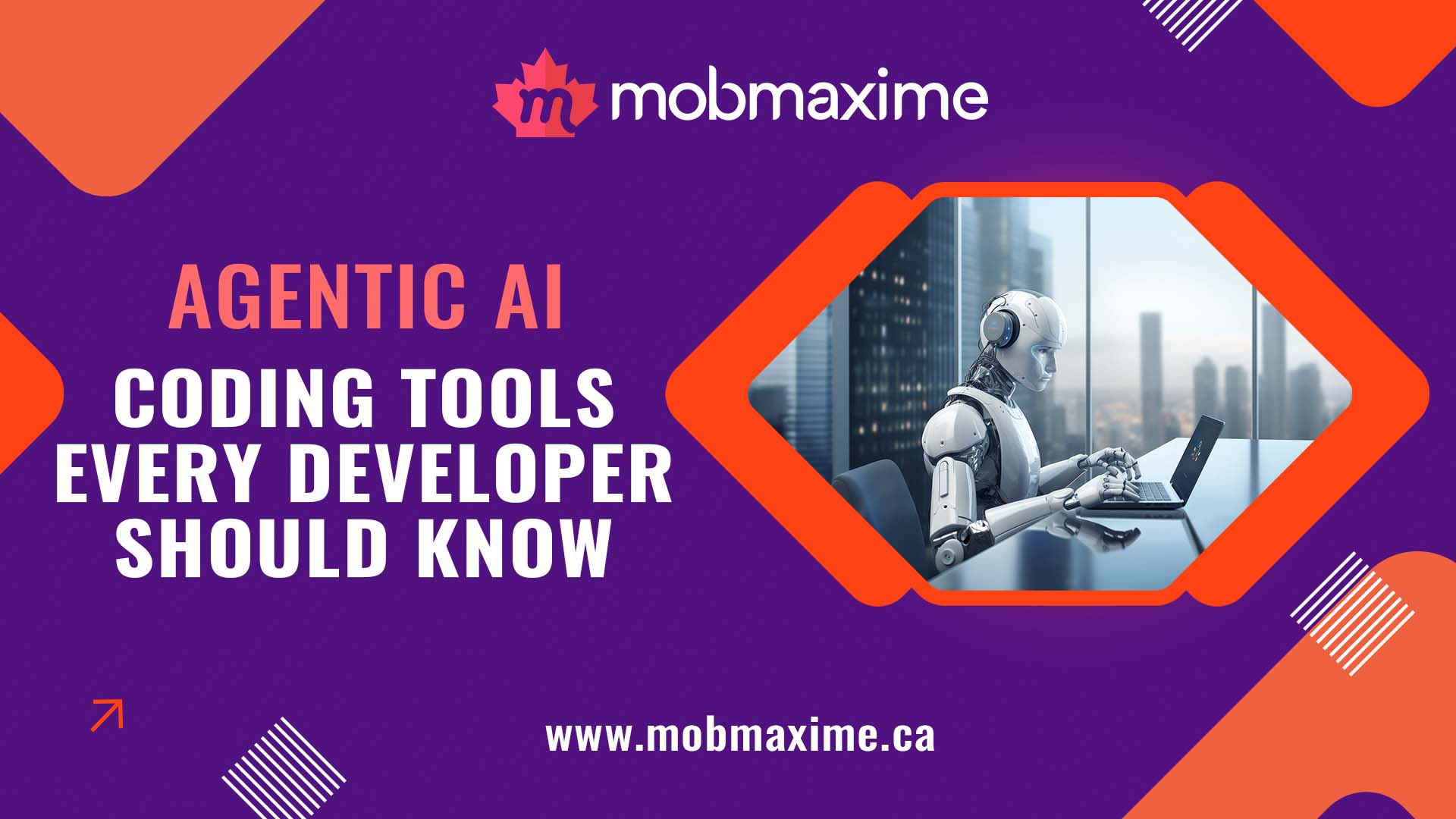
Agentic AI Coding Tools Every Developer Should Know
- 4 Minutes. to Read
- Views
- 21
Software development in 2026 is no longer defined by how fast developers can type code, but by how effectively they can orchestrate intelligent systems. The rise of agentic AI coding tools marks a major shift from traditional AI assistants to autonomous, goal-driven agents that actively participate in software creation.
Unlike simple autocomplete or prompt-based tools, agentic AI for developers can plan tasks, generate code across repositories, run tests, fix issues, and continuously improve outcomes. These tools are becoming essential for teams that want to ship faster, reduce technical debt, and scale without burning out engineers.
In this guide, we explore how agentic AI coding tools work, the best tools developers should know in 2026, real use cases, and how to choose the right solution for your workflow.
What Are Agentic AI Coding Tools?
Agentic AI coding tools are AI-powered systems that operate as autonomous coding agents rather than passive assistants. They combine large language models with planning, memory, tool usage, and feedback loops.
These tools can:
- Understand high-level development goals
- Break tasks into steps
- Generate and modify code across multiple files
- Run tests and analyze results
- Refactor and debug code
- Integrate with CI/CD pipelines
In short, AI agents for software development move beyond helping developers write code line-by-line — they help manage and execute entire coding workflows.
Must Read: Generative AI vs Agentic AI vs Autonomous AI: Understanding the Key Differences
How Agentic AI Coding Tools Work
Understanding how agentic AI coding tools work helps developers trust and adopt them effectively.
Most agentic systems follow a loop:
- Goal Understanding – The developer defines an outcome (e.g., build a feature or fix a bug).
- Planning – The AI agent breaks the goal into tasks and decides execution order.
- Execution – The agent writes code, edits files, or generates tests.
- Tool Usage – It runs linters, tests, builds, or deployment scripts.
- Evaluation – Results are analyzed against the goal.
- Iteration – The agent refines its approach until success.
This loop allows AI agents for code generation to operate independently while remaining aligned with developer intent.
Why Developers Are Adopting Agentic AI Coding Tools
The growing adoption of AI-driven coding tools is driven by tangible benefits:
- Higher productivity without longer hours
- Faster feature delivery with fewer regressions
- Improved code quality through continuous refactoring
- Reduced context switching for developers
- Lower onboarding time for new team members
Rather than replacing developers, agentic tools amplify their impact.
Best Agentic AI Coding Tools in 2026
Below are some of the best agentic AI coding tools, categorized by use case.
1. GitHub Copilot Workspace (Agent Mode)
Best for: End-to-end feature implementation
- Autonomous task planning
- Multi-file code changes
- Integrated testing workflows
- Strong GitHub ecosystem integration
2. OpenAI Codex Agents
Best for: Custom agent workflows
- Goal-driven coding agents
- Tool and API integration
- High-quality code reasoning
- Customizable autonomy levels
3. Cursor IDE Agents
Best for: Daily developer productivity
- Repo-wide understanding
- Agent-based refactoring
- Inline execution and fixes
- Fast iteration inside IDE
4. Devin (Cognition Labs)
Best for: Autonomous software tasks
- Executes tickets independently
- Runs tests and deployments
- Learns from failures
- Handles long-running tasks
5. Auto-GPT–Style Coding Agents (Custom)
Best for: Internal developer platforms
- Fully customizable agents
- Multi-agent collaboration
- Integrates with internal tools
- Requires engineering investment
Agentic AI Coding Tools Comparison Table
| Tool | Autonomy Level | Best Use Case | Strengths | Limitations |
|---|---|---|---|---|
| GitHub Copilot Workspace | Medium–High | Feature development | GitHub-native, reliable | Limited outside GitHub |
| OpenAI Codex Agents | High | Custom workflows | Flexible, powerful | Requires setup |
| Cursor Agents | Medium | Daily coding tasks | Fast, developer-friendly | IDE-bound |
| Devin | Very High | Full task ownership | End-to-end execution | Limited availability |
| Custom Auto-GPT Agents | Variable | Platform teams | Fully customizable | Maintenance overhead |
Agentic AI vs Traditional AI Coding Assistants
| Feature | Traditional AI Tools | Agentic AI Coding Tools |
|---|---|---|
| Prompt-based | Yes | Optional |
| Task planning | No | Yes |
| Multi-file changes | Limited | Native |
| Test execution | Manual | Automated |
| Learning from feedback | No | Yes |
This is why agentic AI coding tools are becoming the standard for modern development teams.
Real-World Use Cases for Developers
Developers use AI agents for software development in several practical ways:
- Feature scaffolding across services
- Automated test generation and maintenance
- Large-scale refactoring
- Bug reproduction and fixing
- Documentation updates
- CI/CD pipeline optimization
These use cases demonstrate how agentic tools integrate into real workflows.
Best Practices for Using Agentic AI Coding Tools
To get the most value:
- Start with clear goals, not vague prompts
- Use human-in-the-loop reviews for critical code
- Restrict permissions for production systems
- Track agent actions with logs and audits
- Treat agents as teammates, not magic tools
Conclusion
Agentic AI is redefining how developers build software. By moving from passive assistance to autonomous execution, AI-driven coding tools enable teams to ship faster, maintain higher quality, and focus on meaningful engineering challenges.
For developers in 2026, learning to work with agentic AI coding tools is no longer optional — it’s a competitive advantage.
Want to see how agentic AI coding tools can fit into your development workflow?
Get a free developer workflow assessment and discover which AI agents can save you hours every sprint.
Frequently Asked Questions (FAQ)
Q-1. What are agentic AI coding tools?
Answer: Agentic AI coding tools are autonomous systems that plan, execute, and refine coding tasks across the software development lifecycle rather than only suggesting code snippets.
Q-2. How are agentic AI tools different from copilots?
Answer: Copilots assist with code suggestions, while agentic tools can complete multi-step tasks like implementing features, running tests, and fixing bugs autonomously.
Q-3. Are agentic AI coding tools safe for production use?
Answer: Yes, when used with proper guardrails such as approvals, tests, access controls, and monitoring.
Q-4. Do developers still need to write code?
Answer: Absolutely. Developers guide architecture, review output, and make strategic decisions while AI handles repetitive execution.
Q-5. Which teams benefit most from agentic AI coding tools?
Answer: SaaS teams, platform engineering groups, and startups building fast-moving products see the highest ROI.
Table of Contents
Recent Blog
-
Cursor AI vs Google Antigravity: Which AI Coding Tool Wins?
January 23, 2026 -
How to Implement Machine Learning in Your Business: Step-by-Step
January 23, 2026 -
Agentic AI Coding Tools Every Developer Should Know
January 23, 2026 -
How Agentic AI Is Reshaping Software Development
January 23, 2026
Category
Newsletter