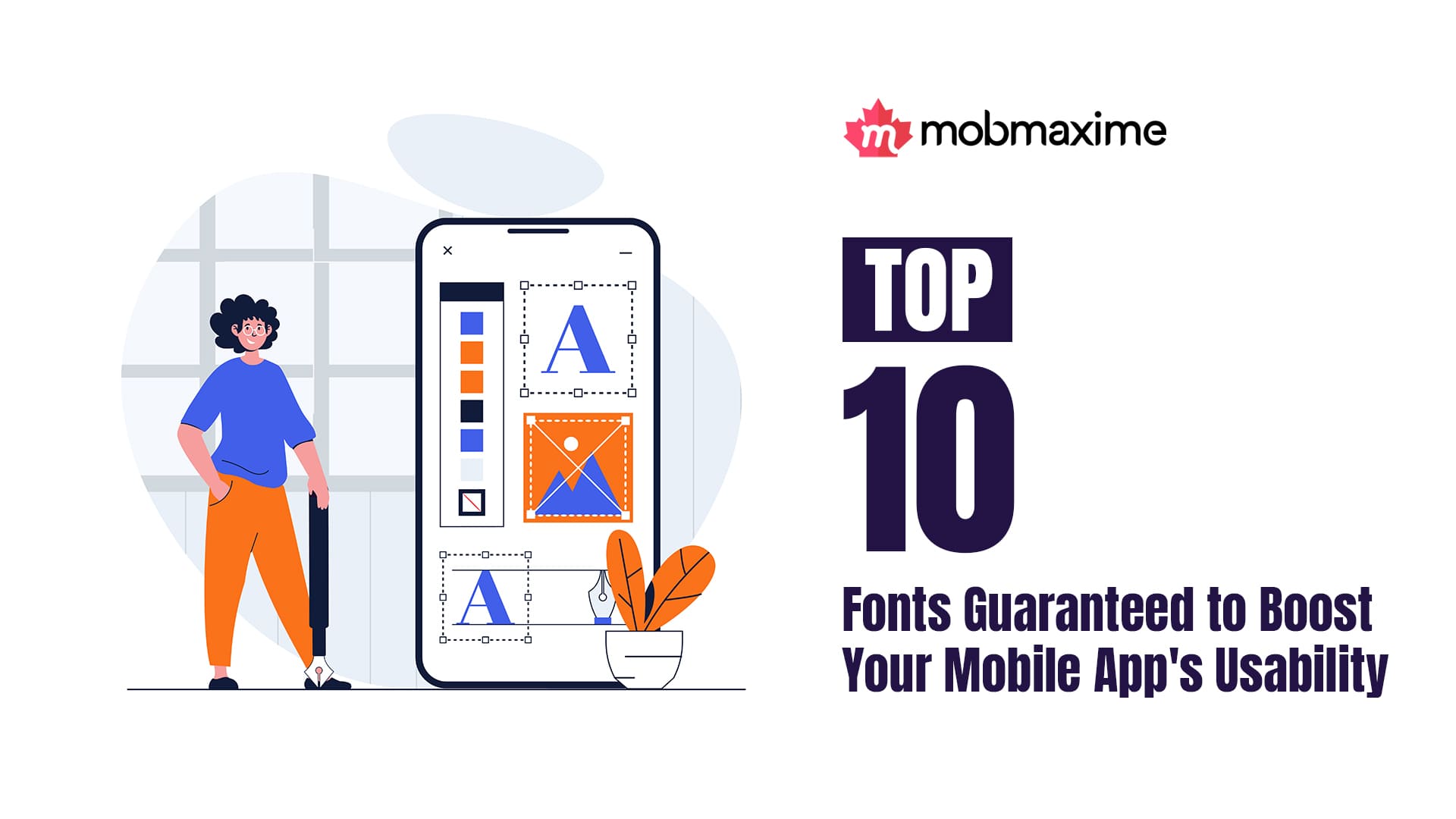
Top 10 Fonts Guaranteed to Boost Your Mobile App’s Usability
- 4 Minutes. to Read
- Views
- 40
When developing a mobile app, every detail matters—from functionality to aesthetics, and especially typography. The choice of font can significantly influence user engagement and overall app usability. Fonts that are easy to read improve user interaction, and their aesthetic appeal can enhance the entire user experience. Here we explore the top 10 fonts that are guaranteed to boost your mobile app’s usability, catering to a wide array of design requirements and target audiences.
-
Roboto
Roboto, designed by Christian Robertson and introduced by Google as the backbone of their Material Design aesthetics, is a sans-serif font that combines geometric forms with friendly and open curves. The balance in its letterforms makes it highly readable on mobile screens, which is essential for text-heavy apps. Roboto offers a variety of weights and styles, making it versatile for both text and display use in mobile interfaces.
-
San Francisco
Apple’s San Francisco is meticulously designed for maximum clarity and readability on all of their devices. Its adaptive and responsive characteristics make it a prime choice for iOS developers. The font offers a range of weights and italics, enabling designers to utilize it in numerous contexts, from bold headlines to subtle texts, all while maintaining legibility at any size.
-
Open Sans
Developed by Steve Matteson, Open Sans is a humanist sans-serif that is neutral yet friendly. Originally designed for print, web, and mobile interfaces, this font features wide apertures and a large x-height, which contribute to its readability on low-resolution screens. Its extensive range of styles makes it highly adaptable for diverse design needs.
-
Lato
Lato, the brainchild of designer Łukasz Dziedzic, was created as a set that would appear transparent when used in body text but would display some original traits when used in larger sizes. The semi-rounded details of the letters give Lato a feeling of warmth, while the strong structure provides stability and seriousness. Lato supports many different languages, which makes it an excellent choice for global applications.
-
Fira Sans
Initially commissioned by Mozilla for the Firefox OS, Fira Sans is designed by Erik Spiekermann. It is characterized by its wide and open letters, which make it exceptionally legible in various digital environments. Fira Sans comes in a vast range of weights, making it a flexible option for mobile UI design, from text to buttons and user interface elements.
-
Montserrat
Julieta Ulanovsky designed Montserrat inspired by the signs of the traditional Montserrat neighborhood of Buenos Aires. This font retains the beauty of urban typography from the first half of the twentieth century. It is perfect for designers looking to give their apps a unique geometric and elegant look, especially suitable for headings and other large text elements.
-
Proxima Nova
Proxima Nova, a design by Mark Simonson, bridges the gap between typefaces like Futura and classic sans faces like Akzidenz Grotesk. Often described as a hybrid that combines modern proportions with a geometric appearance, its readability and friendly style make it popular on both web and mobile platforms. Proxima Nova’s extensive family includes a range of styles and weights, which can be particularly useful for UI designers seeking flexibility and consistency.
-
Avenir Next
Avenir Next is an updated version of the original Avenir font, which was designed by Adrian Frutiger and released in 1988. This revision was undertaken by Frutiger in collaboration with Linotype’s Akira Kobayashi. The update includes new weights and a wider character set. The enhanced Avenir Next is designed to perform well on screen, and its superb legibility makes it a favorite among UX/UI designers for mobile app text.
-
Noto Sans
Google’s Noto Sans aims to support all languages with a harmonious look and feel, eliminating the “tofu” effect (blank boxes displayed when a computer doesn’t recognize a character). Designed with an approach to universal digital readability, Noto Sans covers over 800 languages and 100 scripts. It is ideal for apps that require multi-language support and consistency across various user interfaces.
-
Helvetica Neue
Helvetica Neue, developed in 1983 as a reworking of the 1957 typeface Helvetica, is a quintessential sans-serif that has been widely used across all forms of graphic design. Its clean, crisp lines ensure high legibility, which is vital for mobile app interfaces where space is at a premium. Helvetica Neue is often used in applications that value clarity and simplicity in their user interface design.
Conclusion
Selecting the right font for your mobile app can profoundly affect its usability and user satisfaction. Each font highlighted here offers distinct advantages for enhancing readability, aesthetic appeal, and overall functionality. Whether you are designing for specific linguistic needs or aiming for a particular style, these fonts provide options that can cater to diverse app requirements.
As mobile screens become the predominant way users interact with digital content, ensuring your typography supports readability, reflects your brand identity, and engages users is more important than ever. When choosing a font, consider your app’s purpose, audience, and overall design vision. A well-chosen font not only makes your app more appealing but also improves the user experience, setting your application apart in the competitive digital marketplace.
Table of Contents
Recent Blog
-
Cursor AI vs Google Antigravity: Which AI Coding Tool Wins?
April 24, 2024 -

-

Agentic AI Coding Tools Every Developer Should Know
April 24, 2024 -

How Agentic AI Is Reshaping Software Development
April 24, 2024
Category
Newsletter